

Why Is It So Hard to Open a Small Business Account Online?
 It was the
bank’s customers that inspired my idea for a small business. As VP of digital
banking at a well-regarded financial institution in Michigan, I saw the
dichotomy between customers’ appearance and their account balances. It cemented
the idea that savings is not a concept that’s intuitive, taught, or reinforced,
and I was excited to gamify savings for adults and kids. Once I got the green
light from leadership at the bank and a grant from the state, I looked to
online financial institutions for ways to optimize the small amount of capital
we had in those early days. The key word being online.
It was the
bank’s customers that inspired my idea for a small business. As VP of digital
banking at a well-regarded financial institution in Michigan, I saw the
dichotomy between customers’ appearance and their account balances. It cemented
the idea that savings is not a concept that’s intuitive, taught, or reinforced,
and I was excited to gamify savings for adults and kids. Once I got the green
light from leadership at the bank and a grant from the state, I looked to
online financial institutions for ways to optimize the small amount of capital
we had in those early days. The key word being online.Time and time
again as our company grew and had additional banking needs, I was told to go
into a branch. The few digitally available small and medium business (SMB)
accounts I did find were lacking the features and functionality to which I was
accustomed in personal checking, savings, and loans. Where are the SMB-specific
accounts available online from start to finish?
Between
in-branch account opening requirements, manual reviews, outdated scoring
methods, and holding small business owners to enterprise standards, the
industry is drowning in holdover processes that have no place in today's SMB
banking world. Let's unpack what's wrong with SMB digital account opening, what
getting it right looks like, and what financial institutions and fintechs can
learn from the small and mid-sized business industry's challenges and needs.
SMBs’ banking
options are underrepresented.
My experience is far from an isolated example. SMBs represent 99% of all
U.S. businesses, and more than 80% of small business owners would consider
using a digital
only bank. Yet a 2025 U.S. Bank survey of small and mid-sized
business owners states that 84% say obtaining
enough funding to support their business is one of their top economic
stressors. So clearly needs are not being met, despite business owners strongly
favoring digital banking.
And it’s not just lending. My company has never sought a traditional
commercial or small business loan from a bank, but that doesn’t mean we do not
have banking needs. We want the same things all businesses do—to maximize
liquidity and optimize capital. Banks that focus heavily on lending neglect
other needs of SMBs that can be profitable for both sides. Faster onboarding
and transparency, in addition to easy and clear digital experiences, are the
primary reasons SMBs switch providers. In
fact, Bain & Company research predicts that in the next couple of years,
$60B in SMB transaction-banking revenues could shift
to non-banks and fintechs. If banks don’t start providing
start-to-finish online support for SMBs, it’s not surprising.
But banks want
SMB business.
A 2025 Strategy
Benchmark Study from Jack Henry reported that 80% of financial institutions
have SMB services expansion as part of their strategy this year – 90%
of banks and 72% of credit unions. It’s an intended investment
that’s been trending, up from 78% in 2024 and 65% in 2023. And with small- and
medium-sized businesses’ demand for outside financing and services also on the
rise, banks should be well positioned to deliver. But there are a few holdups.
SMBs’ business
needs are underserved.
In addition to
online access, small business account holders want multi-channel customer
support, security, and personalized service and advice. SMB owners report that
large banks take up to 3 weeks to deliver loan decisioning, while online
lenders respond in 24-48 hours. These fintechs, neo-banks, and other
competitors are a compelling option for underserved SMBs.
It’s the
financial institutions that are missing out. Small and mid-sized companies
represent a $370 billion revenue opportunity. With share of wallet,
acquisition, and deposit upsides, it seems short-sighted to not offer the core
products and experiences SMBs crave for their accounting and payment services.
Why aren’t more banks providing the operational and service models to meet the
needs of this underserved segment?
3 ways banks
can win the business of small businesses.
There is hope
and a place for banks to capture SMB market share. After all, community
financial institutions most accurately reflect the spirit of entrepreneurs and
small enterprises. Banks can set themselves apart in three ways.
- Ignore the SMB checking account and offer the online accounts SMBs really lack: savings accounts. The top megabanks have the lion’s share of checking accounts held by business owners. Consider high-yield savings tailored to SMBs instead. SMBs are looking for safe places to park cash – places that offer liquidity without sacrificing yield.
- Offer competitively priced, flexible products tailored to the unique needs of SMBs. That includes high-yield savings, treasury management, expanded payment access, and SMB loans. And don't forget to promote the rates.
- Focus on operational improvements to SMB application processes and credit decisioning. Small business owners desire digital access, speed, and personalization, because many entrepreneurs base their business financial management on their personal banking habits. Online access and advice are highly desirable.
The upside for
banks that offer online banking services for SMBs.
Helping small-
and mid-sized businesses has strong upsides for banks that prioritize online
solutions.
- Higher revenue for banks is often a direct result of heightened online access. Because SMBs tend to be highly digitally active, they likewise tend to sign in to digital banking platforms at least once a month.
- SMBs are less likely to apply at large banks, in part because they are more likely to be approved by seeking financing at small banks versus other lender options.
- And banks’ existing customer bases are the perfect fodder for cross-selling business products to the entrepreneurs and high net worth account holders on their lists who may also own SMBs.
It shouldn’t be
hard for a small business to open and manage their accounts online. Given the
importance of SMBs to the GDP and the proliferation of these operations, banks
have much to gain by attracting them. It just takes the same entrepreneurial
spirit and strategic problem solving, the hallmark of community banking.
About Author:
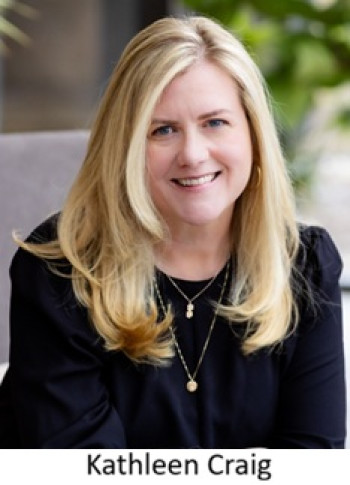
Kathleen Craig is the founder and CEO of
Plinqit, a fintech company that helps banks and credit unions attract deposits.
Prior to launching Plinqit, Craig served as vice president for digital banking
at a well-regarded community financial institution. Craig leverages her shared
industry experience as both banker and fintech leader as an advisor to several
fintech startups and serving on the boards of A2EF and the Association for
Financial Technology. Craig also regularly contributes articles to
publications, such as Forbes, ABA Marketing Magazine, Bank Director, and The
Financial Brand. She earned her Bachelor of Business Administration from
Eastern Michigan University. She has successfully raised over $10 million in
venture funding for Plinqit and has partnered with major fintech companies
globally. Plinqit serves over 50 clients across the U.S., including top banks
by asset size. Craig's work has been recognized with the Innovators of the Year
award, highlighting her significant contributions to the financial technology
industry.